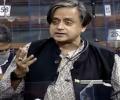
Dubey demanded the removal of Tharoor, alleging that he was using his position in a discriminatory manner.

Minutes after the Rajya Sabha Secretariat asked the six MPs to withdraw from the proceedings, they tried to enter the Rajya Sabha gallery but were stopped by security officials, sources in the secretariat said.

In a communication to the ministry of electronics and information technology, the messaging service said it was committed to protecting the privacy of its over 400 million users in India.
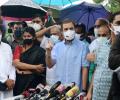
The Orwellian surveillance State is here. And here to stay, asserts Virendra Kapoor.
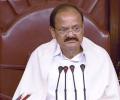
The proceedings of the House were adjourned till 2 pm as slogan-shouting TMC and other opposition MPs trooped into the well of the House, some holding placards, to demand a discussion on the issue of Israeli-made, military-grade Pegasus spyware being used to snoop on opposition leaders, government critics and journalists.

The Opposition MP pointed to a set of changes taking place in India that had caught the Congress and UPA government off guard, such as a shift from rural to urban.

The spyware gained access to a person's phone even if the attacker's WhatsApp call wasn't answered. The calls also often disappeared from call logs, and affected Android, iPhone and Tizen-based phones.

The party, however, did not say exactly when the Congress general secretary received the message.
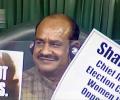
The Opposition intensified its noisy protests in Lok Sabha on Wednesday over Pegasus snooping, farm laws and other issues with some unruly members even hurling papers and torn placards in the House, but the government went ahead with its legislative agenda and three bills were passed amid the din.

WhatsApp, last month, sued Israeli surveillance firm NSO Group, accusing it of helping those buying its spyware Pegasus break into the phones of roughly 1,400 users across four continents.

Congress's chief spokesperson Randeep Surjewala attacked the government saying that in May, WhatsApp had "quickly resolved a security issue and notified relevant Indian and international government authorities".

The demand for Tharoor's removal comes days after the Parliamentary Standing Committee on Information and Technology was set to question government officials on the Pegasus spyware issue.

Like on Pegasus, like Covid, there have been no answers from the government about why the situation on the economy and India's future is where it is today, notes Aakar Patel.

The home secretary is scheduled to brief the panel on home affairs on the situation in Jammu and Kashmir in the next meeting.

Proceedings in Rajya Sabha were repeatedly disrupted on Monday before being called off for the day as opposition members protested on the alleged phone-tapping and other issues and demanded discussions on them in the House.

People familiar with the proceedings said independent cybersecurity experts from a private consulting firm, technology lawyers, government officials and WhatsApp representatives were asked questions about the Pegasus spyware and the larger issues surrounding surveillance, hacking and remedial measures.

The central government on Tuesday informed the Rajya Sabha that no deaths due to lack of oxygen were specifically reported by states and UTs during the second COVID-19 wave.

Facebook-owned messaging platform said Indian journalists and human right activists were among those globally spied upon by unnamed entities using an Israeli sypware Pegasus.

Home ministry sources say there are fears that international lobbies might have been involved in spying, to create a narrative around Indian governance as well as the economy.

Reacting to the recent reports of WhatsApp admitting to a breach of privacy of users in India who were target of surveillance by operators using spyware Pegasus of Israeli company NSO, the West Bengal chief minister said that the central government was spying on politicians, media persons, lawyers, social activists and other important personalities.

Top officials in key ministries, including finance and IT, are of the opinion that a sensitive payments system such as UPI should not be on a platform whose security is possibly compromised.

'But India, increasingly, is not that far behind, which is a story I never expected to tell.'

Images that capture what it was like living through 2021.
The Indian government is concerned only because Indian names are involved, the source said.

The proposed law seeks bars on storing and processing of personal data by entities without the explicit consent of an individual. It, however, provides for exemptions for "reasonable purposes" such as "prevention and detection of any unlawful activity including fraud, whistle-blowing, merger and acquisitions, network and information security, credit scoring, recovery of debt, processing of publicly available personal data and the operation of search engines".

Modi is seen as exceptional not only on account of his acts but also owing to his style. He appears to sacrifice his life for the people -- like a fakir, a figure he came to epitomize even more in 2020 by growing a long white beard. Charisma is above accountability, and Modi has grasped these dynamics.
 © 2026 Rediff.com - Advertise with us - Disclaimer - Privacy Policy - Sitemap - Feedback - About us - Terms of use - Grievances